HomeNeuropsychologyNeuropsychology for adults
You want to know what this involves before you ask anyone to do it.
The whole path, explained before you commit to it: what gets measured, what the report says, and the cognitive work that can follow. Always in person, at your home in Granada.
What you need to clarify
- Memory and cognitive assessment →
- Children: learning and attention →
- Cognitive decline →
- Cognitive profile →
- After a diagnosis →
- Neuropsychology for adults →
How it works
- The question. What you want to know, and who is asking: you, the family, or a doctor. Everything after this is chosen to answer that one question.
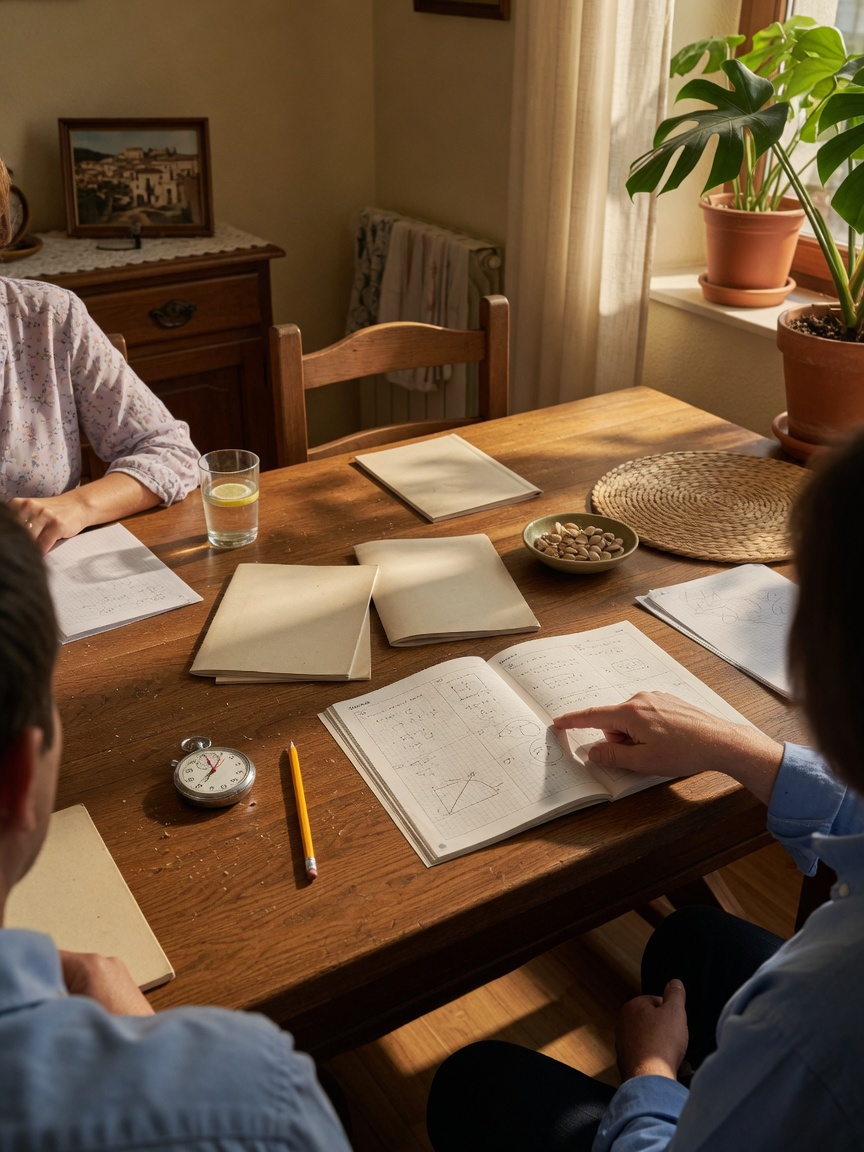
- The tests. An interview, standardised tests with the physical material they need, and whoever lives with you if that is useful. Always in person, at your home in Granada; this part is never done remotely.
- The report and the feedback session. A written report in English or Spanish, in the standard international format, plus a conversation where I go through what it says and what I would do next.
- Cognitive work, when it is worth doing. Chosen from what was found rather than from a catalogue, aimed at the day: routine, paperwork, conversation, leaving the house. Reviewed as things change.
Arranging this from a standing start, for yourself or for somebody else
Most people who arrange a neuropsychological assessment have never seen one. They know it involves tests, they suspect it takes a while, and they are not sure whether what comes out is a diagnosis or an opinion. Doing that inside a health system you did not grow up in, in a language you are still learning, adds a layer of uncertainty that has nothing to do with the thing you are actually worried about.
The short version: it measures how memory, attention, language and the functions you use to plan and decide are working right now, against the norms for your age and education. What it produces is a written report, not a medical diagnosis, which stays with the doctor. It is always done in person, because the tests need physical material, exact timing and somebody watching how you go about them.
What follows depends on what is found. Sometimes nothing needs doing and the value is the baseline. Sometimes the useful part is the conversation with the family. And sometimes there is cognitive work worth doing, built on the profile rather than on generic exercises, and honest about what it can and cannot change.
What you get out of it
Not a verdict. A measured description, in writing, and a decision about what to do next.
- You know what is being measured and why, before anybody agrees to anything.
- You end up with a report in English or Spanish that a doctor in either country can read.
- If work is worth doing afterwards, it is aimed at what the tests actually found.
- If nothing is wrong, you have that in writing, dated, as a baseline for later.
Cognitive stimulation
If you are weighing this up, for yourself or for a parent or a partner, and what you need first is a plain account of what actually happens: what is measured, what you end up holding, and what can be done afterwards.
- What an assessment for an adult consists of, step by step.
- What the report contains and who it is written for.
- The cognitive work that can follow it, and what it is built on.
- Where a psychologist stops and a doctor begins.
Who it is not for
It is not a diagnosis and it is not a treatment for an illness. It does not replace the neurologist and it does not promise to stop anything. The assessment is always in person and is never done by video call.
When it makes sense to get in touch. When something has changed and you want it measured rather than discussed; when a doctor has asked for it; or when there is already a report and what is missing is what to do with it.
The first consultation is free.Book the free consultation →
Frequently asked questions
Does the person being assessed have to agree to it?
Yes, and that is not a formality. Somebody brought along against their will tends to perform below their real level, which makes the results worse than useless. If there is resistance, that is the first thing to work on, and it is usually about what a result would mean.
Is this only for older people?
No. Adults come after a head injury, with attention difficulties nobody ever looked at, after a period of illness or treatment, or because their performance at work has changed. Age is not the criterion; the question is.
What does it cost?
The fees are on the prices page, given as a from figure because what has to be looked at differs from one person to the next. The first consultation is free, and you get the figure for your own case there, before anything is booked.
How do I know which of these I need?
You do not have to know. Say what you have noticed and who is asking, and the first consultation sorts out whether what you need is a full profile, something narrower about memory, or the work that comes after a diagnosis somebody else has already made.